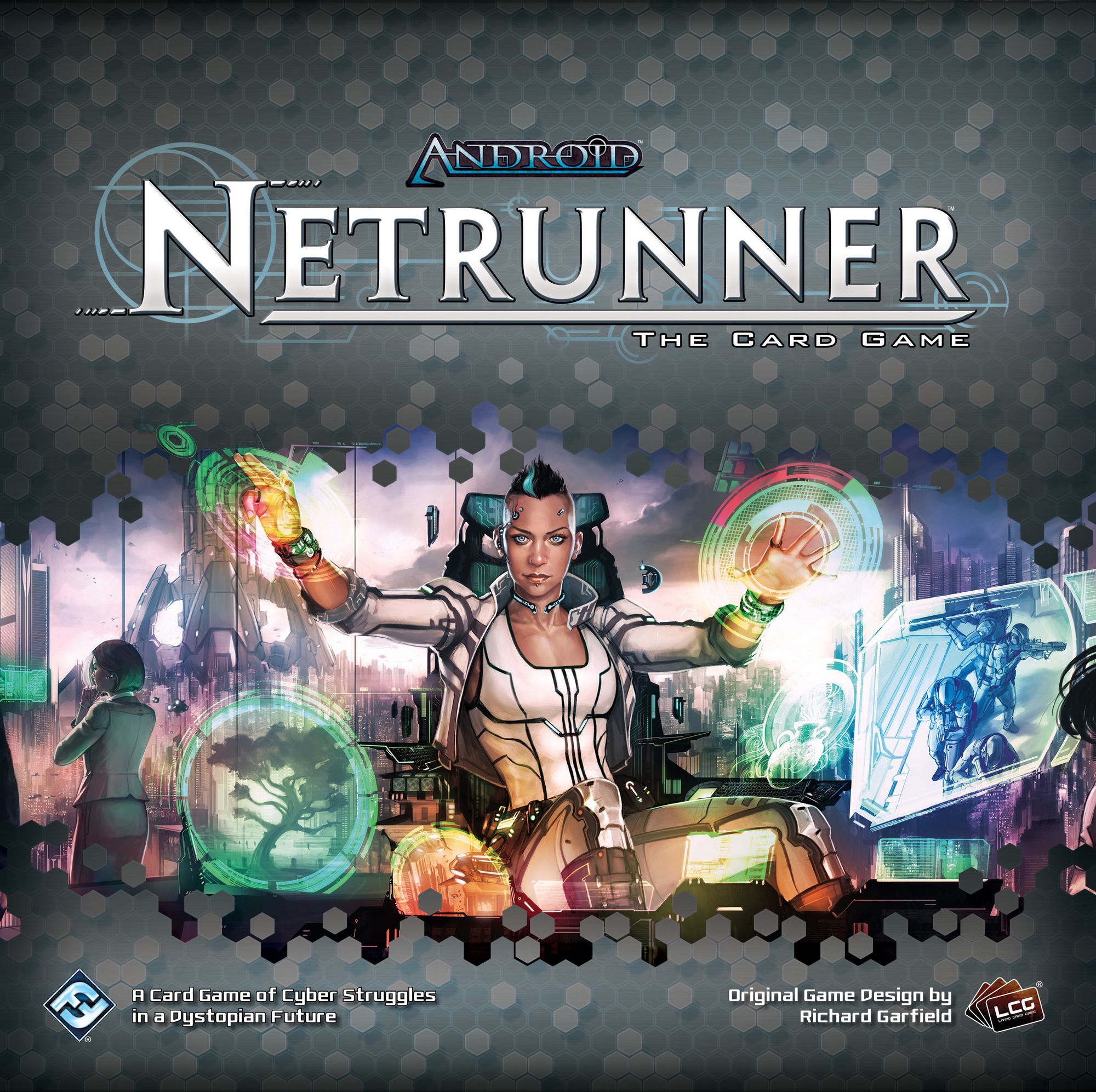
Netrunner is/was a card game with an interesting lineage. It’s now technically “dead” but it’s still played and new products are being produced that are “compatible” with Netrunner.
Netrunner started as a collectable card game designed by Richard Garfield as a near direct reversal of some of the design elements of Magic the Gathering. FFG picked up the license and developed the game under their popular LCG model.
Click One - Bounced
My introduction to the game wasn’t straightforward. One evening in the fall of 2012, after a long family reunion type day, my uncle introduced it to me and my cousin. The terms like “grip, R&D, click” to describe simple terms”hand, deck, action” flew right over our exhausted brains and we bounced off the game pretty hard. Nothing about it seemed starkly interesting to us. A failed launch. Soon after, my uncle sold the game. Little did we know what we just rejected.
Click Two - Access
A year passed. I heard about netrunner again in passing by folks convincingly via podcast and youtube but still didn’t quite get it. I came across it again at the discount table at a game store, the universe wouldn’t let me go without a fight. I took the plunge. Sitting down with the game in a longer form, with some alone time with it, the terms and the cards started to really sink in.
Then I watched Bladerunner and the universe won. Hooked.
The Foundry
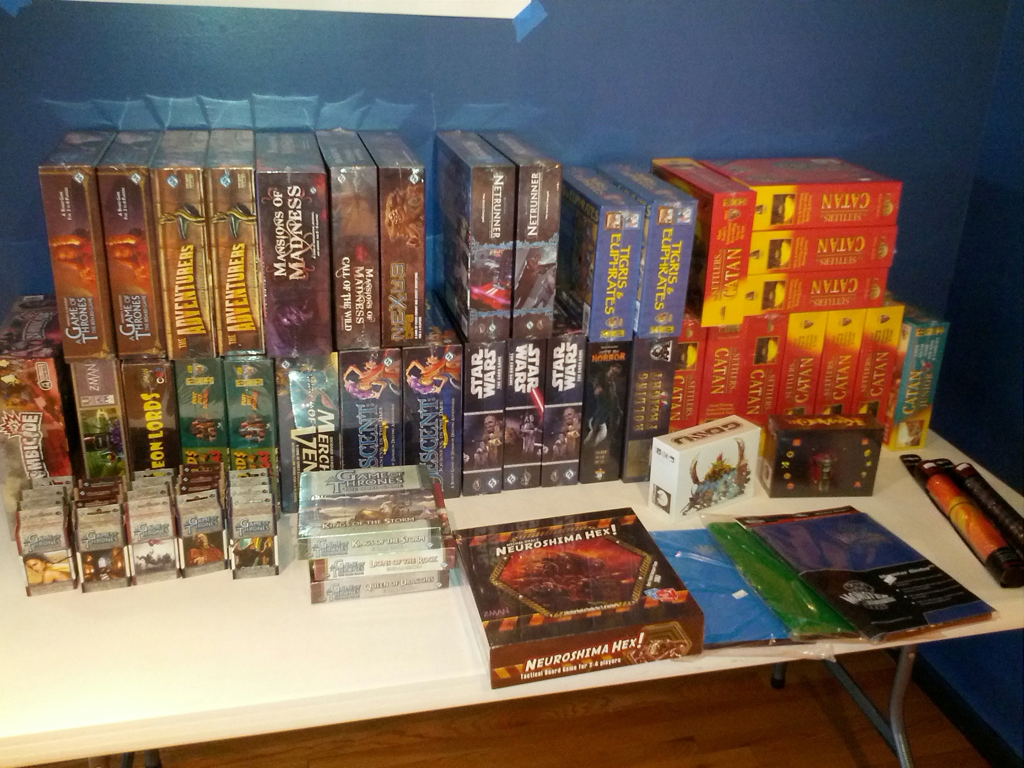
This is one of the things I didn’t appreciate about card games when I started getting into it. You’re going to spend more time with your cards, talking with buddies, designing decks, consuming podcasts, reading articles than actually playing the game. I’d say that between reading new cards, deck building, sleeving, re-building, re-sleeving it’s easy to spend double if not 10x the time compared to actually playing it. It’s where the appreciation and investment and attachment occurs. Especially in-person versus online.
At this point, I was a new parent with a 2 year old and another on the way. Escaping with any regularity wasn’t really an option. Luckily netrunner was unofficially available online using OCTGN, a windows-client app that was similar to Vassal but specifically designed for card games like Netrunner. Later, OCTGN was replaced with jinteki.net as the go-to. Over the past 11 years, jinteki.net has remained a solid pillar of my experience with the game. Its main utility was to test and practice deck design prior to unveiling the decks at friends’ or at weekly Netrunner night at a local game store.
Friends in High Places
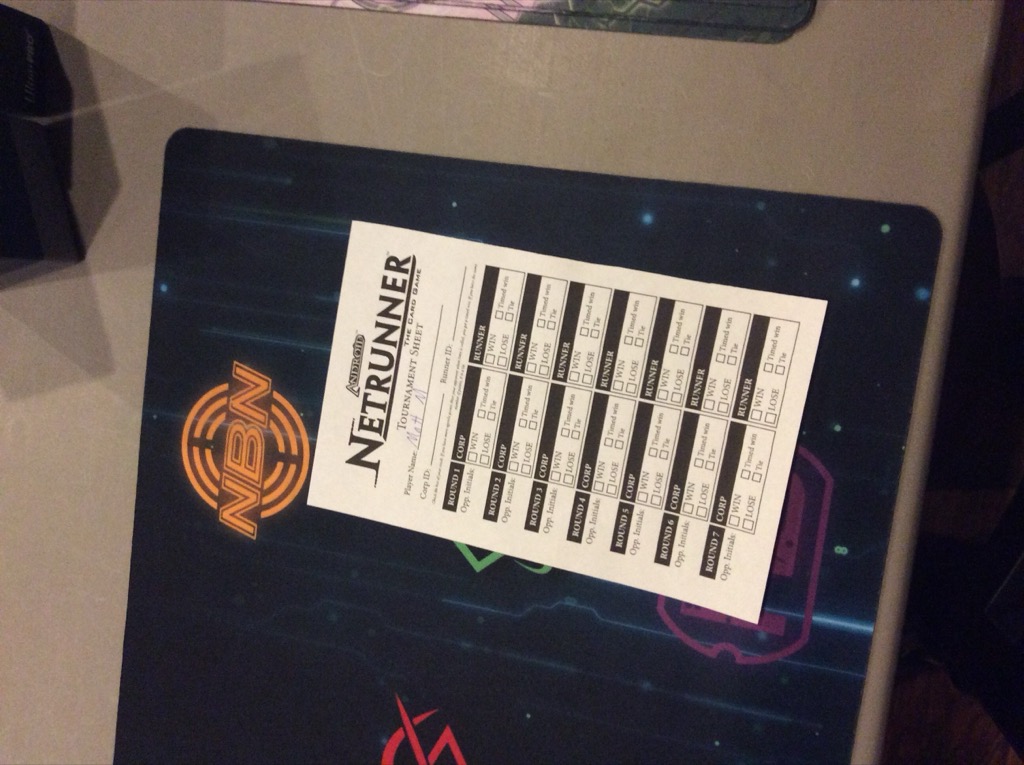
Netrunner was my first exposure to local community play. A local store had a simple flat fee ($10 ish) to use the tables, and they threw in some draft packs as prizes. A vast majority of most games were bright, upbeat and friendly. By my third visit, I gained an appreciation of the game’s deep logic-based meta risk/reward rooted in probability judgment calls.
Brain Rewiring
The complexities of Netrunner caused a litany of rules clarifications, timing rework discussions, mistake correction and new pathways of understanding.
For example, your brain will do this kind of math, constantly…
“You have 5 cards in grid, you didn’t use that remote last turn, and you spent your whole turn getting credits. I bet you’re trying to fast-advance, so I better smash HQ this turn. Knowing the ice suite from the cards I saw before, I’m betting that facedown card is an Enigma, and if I hit my Armitage Codebusting twice, I’ll have enough credits to get through with a Gordian Blade utilizing my HQ Interface.”
https://www.fantasyflightgames.com/en/news/2012/7/13/tapping-the-source-code/
Information Sifting
This quote from Richard Garfield summarizes the mental games I experienced:
“I would say the best part of Netrunner was the space for head games that would take place between the players… In Netrunner, even the most casual player will very quickly start bluffing and wishing they could see their opponent’s cards.”
The brain burn is real and real fun. Rewards multiple playthroughs and all the off-the-table exposure to the game. Games often end in “Was I right? Did I pick up on the clues correctly and do the probability math?” This is a natural positive feedback loop driving me deeper into the game.
Sustainable Growth
The game saw a vibrant and healthy development through expansions (data packs) and bigger “deluxe” expansions. Each cycle was typically 6 data packs kicked off with an deluxe expansion. Each expansion would come out each month, introducing a few new cards for each faction (3 runner factions + neutral, 4 corporate + neutral). Sometimes complete archetypes would be spread out over a few packs, so you were compelled to get the full set of 6.
Hearts and Minds
The theme and art of Netrunner is tidy. Each faction represents a different style and approach of playing the game on brand with their vibe.
Haas Bioroid features AI-powered bioroids that task the player with setting up big servers that slow the runner down. Jinteki wants to bleed the runner out for their dishonorable behaviors. NBN represents the all-knowing media state who knows more about the runner than they should. Wayland is the quintessential mafia megacorp with deep pockets and tough enforcers that will not blink to kill you in the games “real world”.
At the doorsteps and on the trail of the corporations are the 3 runner factions. Criminals want the juicy credits of the corps. Anarchs want to see the world burn. Shapers bust in for the challenge. All are aligned in their overall objective to intercept and disrupt the best laid plans of the evil corpos.
Mixing the factions is where the personality of the player comes through. There are myriad options for economy, ice breakers, access tricks. Which ones you pick through the “splash” influence system
Sure Gamble
FFG did a reasonable job with running Netrunner as a living game. But honestly, I didn’t get the sense that they knew what they had until it was too late. In 2016, I attended GenCon in Indianapolis. I didn’t do the legwork necessary to join the tournament, but it was a massive event. Anecdotally, it seemed that FFG had the hottest card game in town, second to Magic the Gathering.
And then in 2018, things were starting to pick up steam. FFG released a revised 2nd edition, and introduced a very-welcomed “ban list”. I anticipated a long lived and healthy future.
Snare!
But jarringly, it all fell apart. Due to a licensing issue with Wizards of the Coast, FFG lost the rights to the “Netrunner” part of “Android: Netrunner”. It flew too close to the sun. Just like that, this game that I had devoted countless hours to reading, testing, playing, sleeving, unsleeve-ing, bindering, boxing… it’s over, done. Abruptly. Coldly.
Same Old Thing
Or is it? Project Nisei, now Null Signal Games would take up the mantle and continue on, but would it be any good? See part 2. In Part 3, I will lay out my filthy-mid-casual hot takes.